Proposal · Content Strategy

How Dr. Berg Can Rank for "Keto Diet"

Prepared by Chris Ibe · NativeCode — Organic Growth, AEO & GEO  ·  June 2026

This document does two things: it lays out what it takes to rank for "keto diet" and its cluster, and it includes a full sample article below so you can see exactly how I'd structure the page to win organic rankings and AI Overview citations. The technical implementation and schema strategy follow the article.

The opportunity, in three lines

1. "Keto diet" (111K/mo) and its big variants ("ketosis diet" 20K, "keto diet plan" 18K) are currently unclaimed by any of your three competing keto URLs — this is a land-grab, not a defense.

2. You have three pages targeting the same topic (/keto, /blog/keto-diet, /blog/the-keto-diet-for-beginners), and the assets are split across them: one has the best URL and the topical anchors, another has the content, the third has the external authority. No single page has all three — which is the real reason the head term hasn't been won.

3. The fix is to consolidate onto /blog/keto-diet as the one canonical pillar (the keyword is in the URL, and it already holds the new, well-built content), 301-redirect /keto into it to forward its authority and topical anchors, keep the beginners page as the how-to spoke, and pair it with full schema, a medical reviewer, and a spam-link disavow.

What to invest in, in priority order

↓ The sample article below shows how I'd execute step 2. The full implementation, schema architecture, AI-Overview selection logic, and the cluster roadmap follow it.

Keto · Complete Guide

Keto Diet: How It Works, What to Eat, and the Benefits
By Dr. Eric Berg, DCUpdated June 8, 202622 min read
EB
By Dr. Eric Berg, DCLast reviewed June 8, 2026  ·  Recommended: add an RD/MD medical reviewer (see strategy)
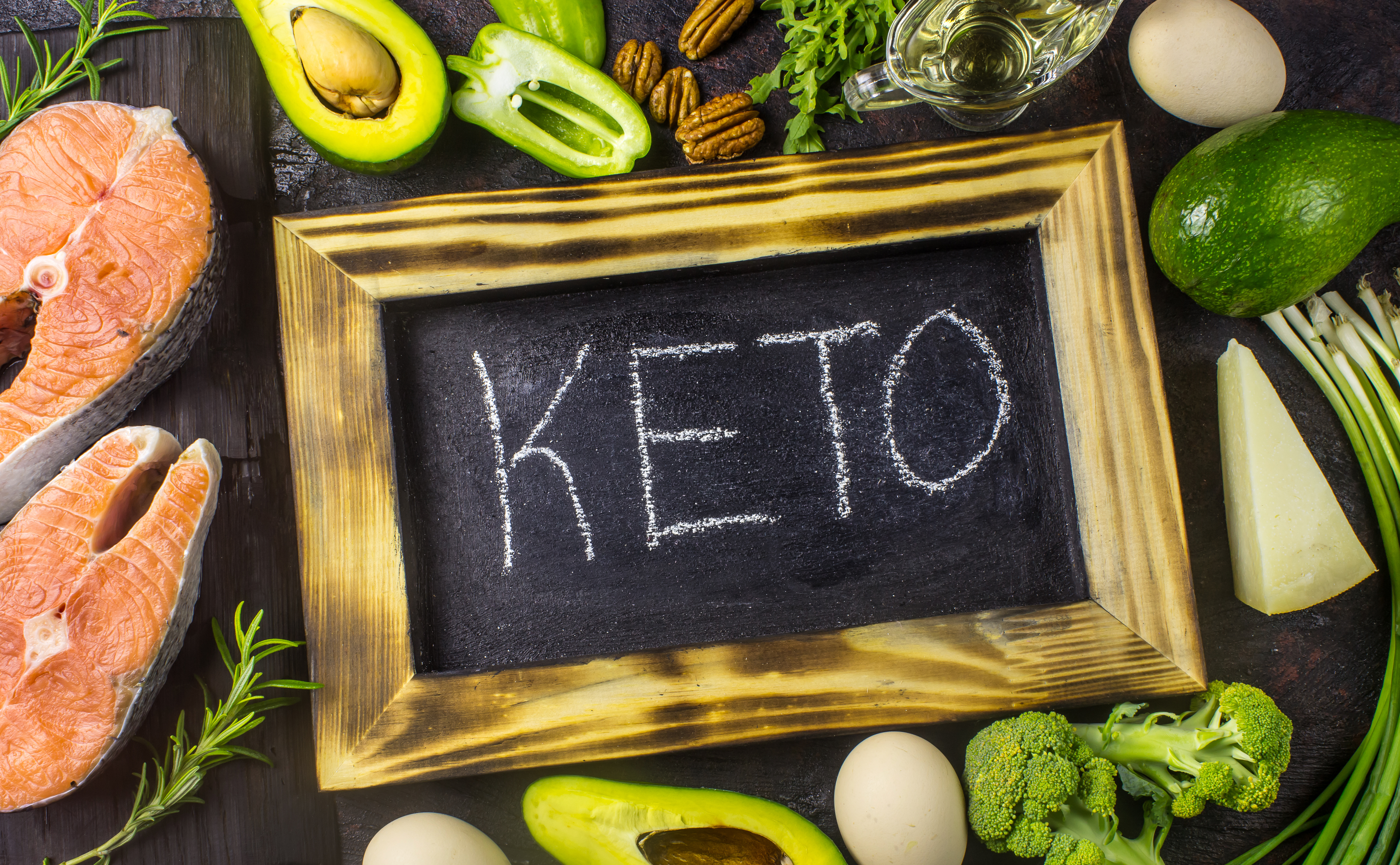
Keto diet foods including avocado, eggs, salmon, nuts, cheese and leafy green vegetables arranged on a table
Image credit: Julia Mikhaylova / shutterstock.com

What is the keto diet?

The keto (ketogenic) diet is a low-carbohydrate, moderate-protein, high-fat eating pattern that shifts your body's main fuel from glucose to fat. By keeping net carbs to roughly 20–50 grams per day, the diet pushes your body into ketosis — a metabolic state where the liver converts fat into ketones for energy. It's used for weight loss, blood sugar control, and steadier energy. The Healthy Keto® approach adds one rule conventional keto skips: food quality matters as much as the macros.

✦ Keto Diet at a Glance
What It Is
A high-fat, low-carb diet that switches your fuel from sugar to fat via ketosis.
Net Carbs
20–50 g/day; many start near 20 g to enter ketosis faster.
Macro Split
~70–75% fat · 20–25% protein · ~5% carbohydrate.
Time to Ketosis
2–4 days; full fat-adaptation in 2–4 weeks.
Best Evidence For
Weight loss and blood sugar / insulin control.
Main Side Effect
Temporary "keto flu," prevented with electrolytes.

The keto diet is one of the most studied and most misunderstood ways of eating. Strip away the noise and it comes down to a single shift: teach your body to run on fat instead of sugar.

This is a complete, evidence-based guide to the ketogenic diet. You'll learn exactly how it works, the different types, the benefits and the strength of the evidence behind each, a full food list with net-carb data, how to start, the side effects, and who should avoid it — plus free calculators to map it to your own numbers.

How the Keto Diet Fits Together

Keto isn't one rule; it's a small system of connected ideas. Tap any concept to see how it links to the others — understanding the relationships is what makes the diet click.

Interactive · Concept Map

The Keto Knowledge Graph

Tap a concept to explore

The ketogenic diet links carbohydrate restriction, ketosis, fat-burning, and the foods that support it. Select any node to see how the pieces connect.

How Does the Keto Diet Work?

The keto diet works by lowering insulin. When you restrict carbohydrates, blood sugar and insulin fall, the body burns through its stored glucose (glycogen), and the liver begins converting fat into ketones for fuel. This fat-burning state — ketosis — is what drives weight loss and improved blood sugar control. It typically takes 2–4 days to begin and 2–4 weeks to fully adapt.

Carbohydrates and sugars are converted into blood glucose, your body's default fuel. Keeping carbs very low removes that easy fuel, so the body turns to its own fat stores. As insulin stays low, fat is released and the liver produces ketones — a clean, efficient fuel the brain, heart, and muscles use readily. The timeline below shows how the switch unfolds.

Interactive · Timeline

What Happens as You Enter Ketosis

0h12h18h24h3 days Fuel level
Glycogen (stored sugar)Ketones (fat fuel)
Hour 0 · Fed state

Running on glucose

Right after eating, blood sugar and insulin are elevated and your body burns dietary glucose. Glycogen stores are full and fat-burning is switched off. Tap a point to move forward in time.

What Are Ketones? The Science of Ketosis

Ketones (ketone bodies) are fuel molecules your liver makes from fat when carbohydrates are scarce. There are three: beta-hydroxybutyrate (BHB), acetoacetate, and acetone. In ketosis, they become the primary energy source for your brain and body in place of glucose.

When carbohydrate and insulin levels stay low, your body turns to stored and dietary fat. The liver breaks fatty acids down (a process called beta-oxidation) into acetyl-CoA, then converts that into ketone bodies through ketogenesis. BHB is the dominant ketone circulating in your blood; acetoacetate can convert into BHB or into acetone, which is largely exhaled, the source of the faint fruity or metallic "keto breath" some people notice early on.

Ketones are an efficient, clean-burning fuel. Critically, they cross the blood-brain barrier, so the brain, which cannot run on fatty acids directly, can derive a large share of its energy from ketones once you are fat-adapted.2 That metabolic shift is why many people report steadier energy and sharper focus after the first week, instead of the blood-sugar swings that come with a carb-heavy diet.

The three ketone bodies
KetoneRoleHow it shows up
Beta-hydroxybutyrate (BHB)Main fuel ketone in the bloodMeasured by blood ketone meters
AcetoacetateProduced first; converts to BHB or acetoneMeasured by urine strips
AcetoneByproduct, not a major fuelExhaled; "keto breath," measured by breath meters

How to Know You're in Ketosis (Signs & Testing)

Most people reach ketosis within 2 to 4 days of keeping net carbs under about 50 g. You will often feel it before you measure it, but the only way to confirm is to test ketone levels.

Common signs of ketosis

How to test for ketosis

Three ways to measure ketones
MethodMeasuresNotes
Urine stripsAcetoacetateCheapest. Accurate in the first weeks, less so once you are fat-adapted and your body wastes fewer ketones.
Blood ketone meterBHBMost accurate. Nutritional ketosis sits around 0.5–3.0 mmol/L.
Breath meterAcetoneReusable, no blood needed; correlates reasonably well with ketosis.
⚠ Important

Nutritional ketosis (the safe, fat-burning state from this diet) is not the same as diabetic ketoacidosis (DKA), a dangerous medical emergency that mainly affects people with type 1 diabetes. Diet-driven ketones rarely exceed about 3 mmol/L. If you have diabetes, only do keto under medical supervision.

The Types of Ketogenic Diet

"Keto" isn't a single protocol. Four main variations exist, suited to different goals and activity levels.

Four common types of keto
TypeHow it worksBest for
Standard (SKD)Consistent low-carb, high-fat, moderate-protein every day (~5% carbs)Most people; weight loss and metabolic health
Healthy Keto®Standard keto built on whole, nutrient-dense foods and 7–10 cups of vegetablesSustainable, long-term health (the approach this guide teaches)
Targeted (TKD)Small carb dose around workoutsActive people training at higher intensity
Cyclical (CKD)Cycles of strict keto with periodic higher-carb refeedsAdvanced athletes and bodybuilders

Benefits of the Keto Diet (and the Evidence)

The keto diet's best-supported benefits are weight loss and improved blood sugar control. A growing body of research also points to potential benefits for heart, brain, hormonal, and liver health — though the strength of evidence varies by condition.
Evidence · Weight Loss
Takeaway
Keto lowers insulin so the body can access stored fat, and high fat plus protein curbs appetite, which together support fat loss.
Evidence
A landmark trial in The New England Journal of Medicine found a low-carb diet produced greater weight loss and better lipid and blood-sugar markers than a low-fat diet over two years.5
Evidence · Blood Sugar & Diabetes
Takeaway
By stabilizing blood sugar and lowering insulin, keto is widely used for insulin resistance and type 2 diabetes management.
Evidence
A review in Nutrients found the ketogenic diet may help manage and prevent type 2 diabetes, with improvements in blood sugar control, insulin sensitivity, body composition, and lipid profiles.1
Evidence · Brain & Cognition
Takeaway
Ketones are an efficient brain fuel, and researchers are studying keto's neuroprotective potential.
Evidence
A Nutrients paper reported ketone bodies can improve mitochondrial efficiency and neuronal energy metabolism, which the authors note may help mitigate neurodegeneration.2

Keto is also being researched for hormonal health (including PCOS, where insulin resistance is a driver), non-alcoholic fatty liver disease, and migraines. The honest framing: treat weight and blood sugar benefits as well-established, and the rest as promising but earlier-stage.

Keto for Specific Health Conditions

Beyond weight loss, keto is studied — and in some cases used clinically — for conditions tied to blood sugar and insulin. The strongest evidence is in type 2 diabetes and drug-resistant epilepsy; other applications are promising but earlier-stage.
⚠ Important

These are not do-it-yourself treatments. If you have a diagnosed condition or take medication, keto should be supervised by your provider, who may need to adjust your doses, especially for diabetes and blood-pressure drugs.

Type 2 diabetes & insulin resistance

Because keto cuts the carbohydrates that raise blood sugar, it directly lowers blood glucose and insulin. Clinical trials report improved HbA1c and, under supervision, reduced medication needs.1 A widely cited one-year study of a supervised low-carb model found significant improvements in blood sugar control and medication reduction in people with type 2 diabetes.6

Epilepsy

The ketogenic diet was developed in the 1920s specifically to treat epilepsy, and it remains an established therapy for drug-resistant seizures, especially in children, with randomized controlled trial support.7 This is keto's oldest and best-documented medical use.

Heart health & cholesterol

This is the most misunderstood area, so here is the honest picture. On keto, triglycerides typically fall and HDL ("good") cholesterol often rises — both favorable. LDL is more variable: most people see neutral or improved numbers, but a subset (often lean, very active individuals) see LDL rise. The quality of your fats matters — whole-food sources over processed ones — and anyone with cardiovascular risk should monitor their full lipid panel with their provider rather than assume the diet is automatically good or bad for their heart.

PCOS

Polycystic ovary syndrome is closely linked to insulin resistance. By improving insulin sensitivity, low-carb and keto approaches have been associated in some studies with more regular cycles, lower androgen levels, and easier weight management. Evidence is encouraging but still building.

Fatty liver (NAFLD)

Non-alcoholic fatty liver disease tracks closely with insulin resistance and excess carbohydrate. Carbohydrate restriction has been shown to reduce liver fat, which is why low-carb eating is often discussed as a dietary lever for NAFLD.

Brain & cognition

Because ketones are an efficient brain fuel, researchers are actively studying keto in neurological and cognitive conditions.2 This is a genuinely exciting area, but most of the human evidence is early-stage, so it should be framed as promising rather than proven.

Keto Macro Calculator

Your macros depend on your body and goal. Enter your details for a personalized starting target — grams of fat, protein, and net carbs per day — with a live breakdown.

Free Tool · Calculator

Calculate Your Keto Macros

1530 cal/day
Fat119grams/day
Protein96grams/day
Net Carbs25grams/day
Daily target: 1,530 calories · about 75% fat / 25% protein / 5% carbs
Estimate only. Calories are approximated from body weight and activity; protein is set at ~25% of calories and net carbs at 25 g. Individual needs vary — for a precise plan, consult a registered dietitian.
The Healthy Keto Macro Ratio
Keto macros Fat — 75%Your primary fuel Protein — 20%Moderate, ~3–6 oz/meal Carbs — 5%20–50 g net carbs/day
The Healthy Keto plate is roughly 75% fat, 20% protein, and 5% carbohydrate — the ratio that keeps most people in ketosis.

What Are Net Carbs?

Net carbs are the carbohydrates that actually affect your blood sugar: total carbohydrates minus fiber. Fiber isn't digested like other carbs, so it doesn't raise blood sugar or break ketosis. Counting net carbs gives you a more accurate daily target than total carbs.

Use the calculator to check any food, and see typical values for common keto foods in the table below.

Free Tool · Calculator

Net Carb Calculator

Net Carbs
3.5
grams
✓ Fits easily in a keto budget
Net carbs = total carbohydrate − fiber − half of sugar alcohols.
Net carbs in common keto foods (approx. per serving)
FoodServingTotal carbsFiberNet carbs
Avocado1/2 medium6 g5 g1 g
Spinach (raw)1 cup1 g0.7 g0.3 g
Broccoli1 cup6 g2.5 g3.5 g
Cauliflower1 cup5 g2 g3 g
Almonds1 oz (23)6 g3.5 g2.5 g
Egg1 large0.4 g0 g0.4 g
Cheddar cheese1 oz0.9 g0 g0.9 g
Blueberries1/4 cup5.5 g1 g4.5 g

Keto Diet Food List: What to Eat & Avoid

Know which foods keep you in ketosis and which break it. Here's the full keto food list.

✅ Keto-approved foods (eat freely)
CategoryExamples
Non-starchy vegetablesBroccoli, spinach, kale, cauliflower, zucchini, bell peppers, asparagus
Healthy fatsOlive oil, avocado, coconut oil, grass-fed butter, ghee, nuts, seeds
Quality proteinPasture-raised eggs, grass-fed beef, wild-caught fish, poultry, sardines
Full-fat dairyCheese, Greek yogurt, heavy cream
Low-sugar fruitAvocado, berries in small amounts, olives
❌ Non-keto foods (avoid)
CategoryExamples
Grains & starchesBread, pasta, rice, cereal, crackers, chips
Sugary foodsCakes, cookies, ice cream, candy, most desserts
Starchy vegetablesPotatoes, corn, peas
Most fruitBananas, grapes, mango
Sweetened drinksSoda, juice, sweetened coffee drinks
📷 Image slot · Food list visual (image-pack target)
🥑

Keto food groups — flat-lay infographic

Overhead flat-lay grouping the keto staples (fats, vegetables, protein, dairy). Strong Google Images / AI Overview thumbnail candidate.
Alt
Flat-lay of keto foods grouped by category: healthy fats, non-starchy vegetables, quality protein, full-fat dairy
File
keto-food-list-categories.jpg · 1200×1200 · add ImageObject schema

What Can You Drink on Keto?

Stick to zero-carb drinks: water (with electrolytes), black coffee, and unsweetened tea. Avoid soda, juice, sweetened drinks, and most alcohol.

Good choices: water and sparkling water, black coffee, unsweetened tea, and bone broth (which doubles as an electrolyte source). Adding a pinch of salt or an electrolyte mix to your water helps prevent the keto flu.

What about alcohol?

Dry wine and pure spirits (vodka, gin, whiskey, tequila) are low in carbohydrate, but alcohol still has a catch: your body prioritizes metabolizing it, which temporarily pauses fat-burning, and tolerance often drops on keto. Beer and most cocktails are high in carbs. If you drink, keep it occasional and choose the driest option.

Avoid: soda, fruit juice, sweetened coffee drinks, sports drinks, beer, and sugary cocktails — these can spike blood sugar and knock you out of ketosis quickly.

How to Start the Keto Diet: A 5-Step Plan

You don't need anything fancy to begin. Follow these five steps and you'll be in ketosis within a few days.

1–5Steps to start — no special equipment
20gNet carbs for the fastest entry into ketosis
2–4dUntil most people reach ketosis
  1. Clear out high-carb foods. Remove bread, pasta, cereal, sugary snacks, and soda. Restock with greens, vegetables, quality proteins, and healthy fats.
  2. Set your net-carb target. Aim for 20–50 g/day; start near 20 g for the first couple of weeks to enter ketosis faster.
  3. Build keto meals. Center every meal on healthy fats, moderate protein, and non-starchy vegetables.
  4. Hydrate and replace electrolytes. Replenish sodium, potassium, and magnesium — this prevents most keto flu.
  5. Track net carbs and adjust. Use a journal or app for the first few weeks to catch hidden carbs, then fine-tune.
✦ Decision Framework

What's Your Keto Starting Point?

Answer three quick questions for a personalized starting target. General guidance only — if you take medication or have a health condition, confirm with your clinician first.

1 Have you done low-carb before?
2 What's your main goal?
3 How fast do you want to adapt?
Suggested Starting Point

Keto vs. Other Diets

How does keto differ from the diets it's most often confused with?

Keto compared to low-carb, Atkins, and paleo
DietCarbsKey difference from keto
KetoVery low (20–50 g net)Designed to maintain continuous ketosis
General low-carbLow–moderate (50–150 g)Reduces carbs but usually not enough for sustained ketosis
AtkinsVery low, then increasingStarts keto-like but adds carbs back in later phases
PaleoModerateFocuses on food type (whole, ancestral) not carb limits; not necessarily ketogenic

The simplest way to remember it: all keto is low-carb, but not all low-carb is keto. Keto's defining feature is keeping carbs low enough to sustain ketosis.

Keto Diet Variations

Keto can be adapted to different diets and goals. The main variations change either what foods you build it from or how strictly you track.
Common keto variations
VariationHow it works
Vegetarian ketoBuilt on eggs, dairy, nuts, seeds, low-carb vegetables, and plant fats like olive, avocado, and coconut oil.
Vegan ketoHarder but doable: avocado, coconut, nuts, seeds, tofu and tempeh, low-carb vegetables, and plant oils. Watch protein and B12.
Dirty ketoHits the macros using processed foods. It will produce ketosis but skips the nutrient quality that makes keto healthy. Not recommended.
Lazy ketoTracks only net carbs, not fat and protein. Simpler to follow but less precise.

Keto for women

Some women feel better with a slightly higher carb limit or a cyclical approach, since hormones can be sensitive to prolonged carbohydrate restriction. Women who are pregnant or breastfeeding should not use keto for weight loss without medical guidance.

Side Effects & Who Should Avoid Keto

The most common keto side effect is the temporary "keto flu" — fatigue, headache, irritability, and brain fog in the first days, caused by fluid and electrolyte loss. It usually passes within a few days and is largely prevented with water, electrolytes, and a gradual carb reduction.

Beat keto flu with four steps: hydrate and replenish sodium, potassium, and magnesium; eat foods rich in B vitamins; lower carbs gradually rather than all at once; and eat enough fat and non-starchy vegetables.

Who should avoid or get medical guidance first

⚠ Important

Keto can change how some medications act, especially for diabetes and blood pressure. If you take medication, are pregnant, or manage a health condition, talk to your doctor before starting. This article is educational and not a substitute for personalized medical care.

Electrolytes on Keto

As insulin drops, your kidneys release water and electrolytes. Most "keto flu" symptoms — fatigue, headaches, muscle cramps — are really electrolyte loss, not the diet failing. Replenishing sodium, potassium, and magnesium prevents most of it.
The three electrolytes to prioritize
ElectrolyteWhy it mattersWhere to get it
SodiumLost first and fastest; low levels cause fatigue and headacheSalt food to taste, bone broth, pickles
PotassiumSupports muscle and nerve function; low levels cause crampsLeafy greens, avocado, mushrooms, salmon
MagnesiumEases cramps and supports sleepNuts, seeds, leafy greens, or a supplement

A simple routine prevents most issues: salt your food, drink to thirst rather than forcing water, eat potassium- and magnesium-rich whole foods, and consider a magnesium supplement if cramps persist.

Is Keto Safe Long-Term?

For most healthy adults, a well-formulated, whole-food keto diet appears safe long-term, though very-long-term data is still developing. The keys are food quality, plenty of vegetables and electrolytes, and periodic check-ins with your provider.

Many people follow keto for years; others cycle in and out, or use it to reach a goal and then transition to a less strict low-carb pattern. The common long-term concerns — nutrient gaps and lipid changes — are largely managed by building the diet from whole foods and monitoring your labs.

Coming off keto

If you transition off, reintroduce healthy carbohydrates gradually — vegetables, fruit, legumes, then whole grains — rather than all at once. A sudden large carb load tends to cause rapid water-weight regain, bloating, and blood-sugar swings, which can feel discouraging even though it is not true fat gain.

⚠ Important

Long-term suitability is individual. If you have a health condition or take medication, work with your provider to decide whether keto is the right long-term approach for you.

Common Keto Myths

What keto is — and isn't
MythReality
"Keto is just bacon and butter."Healthy Keto centers on vegetables, quality protein, and whole-food fats — not processed meat.
"You can eat unlimited calories."Fat is calorie-dense; a surplus still gets stored. Portion still matters.
"Your brain needs carbs to work."The brain runs efficiently on ketones once you're fat-adapted.
"Keto wrecks your cholesterol."On whole foods, many people see improved triglycerides and HDL; monitor with your provider.

Key Takeaways

  • The keto diet switches your fuel from sugar to fat by triggering ketosis.
  • Keep net carbs to 20–50 g/day; aim for ~70–75% fat, 20–25% protein, 5% carbs.
  • The strongest evidence is for weight loss and blood sugar control.
  • Build it on whole foods (Healthy Keto) and prevent keto flu with electrolytes.
  • It's not for everyone — get medical guidance if you're pregnant, diabetic, or on medication.

Frequently Asked Questions

What is the keto diet?
The keto (ketogenic) diet is a low-carbohydrate, moderate-protein, high-fat eating pattern that shifts your body's main fuel from glucose to fat. Keeping net carbs to roughly 20–50 g per day triggers ketosis, where the liver converts fat into ketones for energy.
How does the keto diet work?
By restricting carbohydrates, keto lowers blood sugar and insulin. The body burns through stored glucose (glycogen), then shifts to breaking down fat into ketones for fuel. This low-insulin, fat-burning state is what drives weight loss and improved blood sugar control.
What can you eat on the keto diet?
Non-starchy vegetables, healthy fats (olive oil, avocado, coconut oil, butter), and quality proteins (eggs, fish, grass-fed meat, full-fat dairy). Avoid bread, pasta, rice, cereal, sugar, most fruit, and starchy vegetables like potatoes and corn.
Is the keto diet healthy?
For most healthy adults, a whole-food keto diet is considered safe and is linked to better blood sugar control, insulin sensitivity, and body composition. If you're pregnant, have a medical condition, or take medication, consult a healthcare provider first.
How many carbs can you eat on keto?
Most people keep net carbs between 20 and 50 grams per day to enter and stay in ketosis. Net carbs are total carbs minus fiber.
What are the benefits of the keto diet?
Reported benefits include weight loss, improved insulin sensitivity and blood sugar control, steadier energy, reduced appetite, and support for heart, brain, hormonal, and liver health. The strongest evidence is for weight loss and blood sugar control.
What are the side effects of the keto diet?
The most common side effect is the temporary keto flu (fatigue, headache, irritability, brain fog) caused by fluid and electrolyte loss while adapting. It usually passes within a few days and is minimized by hydration, electrolytes, and a gradual reduction in carbs.
How long does it take to get into ketosis?
Most people enter ketosis within 2–4 days of eating under about 50 g net carbs per day. Becoming fully fat-adapted usually takes two to four weeks.
What is the difference between keto and low-carb?
All keto is low-carb, but not all low-carb is keto. Keto restricts carbs low enough (usually under 50 g net) to maintain continuous ketosis, while general low-carb diets allow more carbohydrate and may not produce ketosis.
Who should not do the keto diet?
Keto may not be appropriate for people who are pregnant or breastfeeding, those with type 1 diabetes or on certain medications without supervision, people with a history of eating disorders, or those with certain liver, pancreatic, or kidney conditions. Consult a healthcare provider first.
How do I know if I’m in ketosis?
Most people enter ketosis within 2 to 4 days of keeping net carbs under about 50 g. Common signs include reduced appetite, steadier energy and focus, mild fruity or metallic breath, and early water-weight loss. The only way to confirm is to test ketone levels.
How do I test for ketosis?
Three ways: urine strips (cheapest, best in the early weeks), a blood ketone meter (most accurate, with nutritional ketosis around 0.5 to 3.0 mmol/L), or a breath meter that measures acetone.
Does the keto diet raise cholesterol?
It varies. Triglycerides usually fall and HDL often rises, both favorable. LDL is more variable: most people see neutral or improved numbers, but some, often lean and active people, see it rise. Choose whole-food fats and monitor your full lipid panel with your provider.
What can you drink on keto?
Water with electrolytes, black coffee, and unsweetened tea are ideal. Avoid soda, juice, sweetened drinks, and most alcohol. Dry wine and pure spirits are low-carb but still pause fat-burning, so keep them occasional.
Can you exercise on keto?
Yes. Expect a short dip in performance during the first week or two of adaptation, after which most people return to normal. Endurance activity often does well on keto; very high-intensity efforts may benefit from a small amount of targeted carbohydrate.
Can vegetarians or vegans do keto?
Yes, with planning. Vegetarian keto relies on eggs, dairy, nuts, seeds, and plant fats. Vegan keto is harder but possible using tofu, tempeh, coconut, avocado, nuts, seeds, and low-carb vegetables, with attention to protein and B12.
Is keto safe long-term?
For most healthy adults, a whole-food keto diet appears safe long-term, though very-long-term data is still developing. Food quality, adequate vegetables and electrolytes, and periodic lab check-ins with your provider are what keep it healthy over time.
How much weight can you lose on keto?
The first week brings fast water-weight loss; after that, fat loss depends on your overall calorie balance, not ketosis alone. A steady, sustainable rate is more durable than rapid drops, and results vary from person to person.

Sources

  1. Dyńka D, et al. Effect of the Ketogenic Diet on the Prophylaxis and Treatment of Diabetes Mellitus. Nutrients. 2023;15(3):500. PMC9919384
  2. Shabbir I, et al. Investigating the Therapeutic Potential of the Ketogenic Diet in Modulating Neurodegenerative Pathophysiology. Nutrients. 2025;17(7):1268. PMC11990313
  3. Lonnie M, et al. Protein for Life: Review of Optimal Protein Intake. Nutrients. 2018;10(3):360. PMC5872778
  4. Khandia R, et al. A Comprehensive Review of Autophagy. Cells. 2019;8(7):674. PMC6678135
  5. Shai I, et al. Weight Loss with a Low-Carbohydrate, Mediterranean, or Low-Fat Diet. N Engl J Med. 2008;359:229-241. NEJMoa0708681
  6. Hallberg SJ, et al. Effectiveness and Safety of a Novel Care Model for the Management of Type 2 Diabetes at 1 Year: An Open-Label, Non-Randomized, Controlled Study. Diabetes Therapy. 2018.
  7. Neal EG, et al. The ketogenic diet for the treatment of childhood epilepsy: a randomised controlled trial. Lancet Neurology. 2008.

Medical Disclaimer: This content is for educational purposes only and is not medical advice. Dr. Eric Berg, DC is a chiropractor, not a medical doctor; he does not diagnose or treat medical conditions. Consult a qualified healthcare provider before changing your diet, especially if you are pregnant, have a medical condition, or take medication.

By: Dr. Eric Berg, DC · Last reviewed: June 8, 2026


Strategic Appendix

Why This Page Ranks: Implementation & AI-Selection Strategy

Authored by Chris Ibe · Organic Growth & AEO/GEO Strategy · Prepared for the Dr. Berg editorial & SEO team
Strategist Notes — Not for Publication

This appendix documents how the page above was built and the reasoning behind every structural decision. It is written for your team, not for readers — it should be removed before the article is published. The goal is to be transparent about what on-page work can and cannot do for a head term as competitive as "keto diet."

1. The honest ranking thesis

"Keto diet" is a 111K–113K/month head term with a Moz Difficulty of 72–74 and a minimum Domain Authority of 91 to crack the top 10. DrBerg.com sits at roughly DA 56. I want to be direct about what that means, because it shapes the whole strategy:

On-page work alone will not put you at #1 organically for "keto diet." That position is authority-gated, and closing a 35-point DA gap is an off-page, multi-quarter effort. Any strategist who promises top-3 from a content rewrite is overselling. What on-page can do — and what this build is engineered for — is win the surfaces that are structure-and-entity-gated rather than authority-gated, and climb the organic position as far as your authority allows while the off-page work compounds.

So I've segmented the SERP by which lever moves it:

Target surfaceGated byRealistic outcome from this buildTimeline
AI Overview citation ("keto diet", "what is keto", "how does keto work")Extractability + entity trustWinnable now — the page is built definition-first with entity grounding and clean structured data2–8 weeks of indexing
People Also Ask / FAQ rich resultsFAQ markup + answer qualityWinnable now — 10 mapped Q&As in FAQPage schema2–6 weeks
Featured snippet (definition, "how many carbs on keto", net-carb table)Format match + concisionStrong shot — boxed definition, data table, direct answers1–3 months
Long-tail / mid-tail cluster (how to start, food list, rules, beginners)Relevance + moderate authorityMove pos 20–48 → page 1 — these already rank close2–4 months
"Keto diet" head term, organic top-10Domain AuthorityGradual climb — needs the consolidation + authority plan below, not on-page alone6–12+ months

The valuable, defensible win is the top band of that table. In an AI-Overview-present SERP (and the keto-diet SERP shows AI Overview, Images, and PAA), the citation is increasingly the most visible result — and it does not require DA 91. That is the prize this build goes after first.

2. The prerequisite: kill the cannibalization

Before any of this ranks, one site-level issue has to be fixed. You are running three pages on the same topic, and the data shows each holds a different piece of what a winning page needs:

URLWhat it hasWhat it lacks
/ketoBest URL (top-level, in nav), highest PA (41), and the topical anchors — 96% follow, 81% "keto"/"keto diet" anchoredThin content; only 52 ranking keywords; ~80% of its links are spam-flagged
/blog/keto-dietSolid, recently updated content (May 2025)Weak, mostly junk links (PA 36); redundant with both others
/blog/the-keto-diet-for-beginnersThe external authority — 278 linking domains, 825 ranking keywordsSpam-anchored ("go now" 498×), 80% nofollow; ranks for branded terms, not the head term

The topic's strengths are fragmented across three URLs, so Google has no single page to rank for "keto diet."

The timeline tells the story

The beginners page was first published in 2018 and spent ~7 years accruing authority (278 domains, 825 keywords). /blog/keto-diet was published new in March 2025 — which is why it is thinner (93 domains, 70 keywords): it has only had a few months. On the day /blog/keto-diet launched, the 2018 beginners page was re-dated the same day (both now show "May 30, 2025"), so a brand-new article was dropped directly on top of an established one covering the same topic. /keto has no publication date and thin content. That launch is the moment the cannibalization began.

The backlink finding behind it

I pulled all three link profiles. The two blog articles barely have any topical anchors (just 9 and 7 exact "keto diet" anchors; their dominant anchor is the spam pattern "go now", 498× on the beginners page). The topical anchors that the head term actually needs are stranded on the thin /keto page — 99 "keto" anchors plus 9 "keto diet", 96% follow. So the link signal exists; it is simply pointing at the wrong (empty) page. That is exactly why consolidating onto /keto is the move: it unites the topical anchors with real content. One caution — /keto's links are ~80% spam-flagged and the exact-match "keto" anchor is over-optimized, so a disavow review and anchor diversification must run alongside the build.

Recommended structure Consolidate onto /blog/keto-diet. Make it the canonical head-term pillar ("keto diet", "ketosis diet", "what is keto", benefits) — the keyword is in the slug and the strong new content already lives there. 301-redirect /keto/blog/keto-diet to forward its PA and topical anchors. Keep /blog/the-keto-diet-for-beginners as the how-to spoke ("how to start keto", "keto diet rules") — do not redirect it; it owns 825 long-tail keywords. Cross-link the spoke and any hub up to the pillar with exact-match "keto diet" anchors.

3. How it was implemented

The page is a single, self-contained build with no external dependencies beyond the web fonts. Key implementation decisions:

Performance budget: fonts are the only blocking resource; all CSS/JS is inline and small; images are lazy-loaded; the SVGs are vector. This protects Core Web Vitals, which is itself a ranking input.

4. Schema architecture (9 surfaces)

The page ships nine coordinated JSON-LD blocks. Each is chosen for a specific job in either classic rich results or AI/LLM grounding — not for volume. They are wired together by @id references so search engines read them as one connected entity rather than nine loose objects.

Schema typeJob it doesSurface it targets
MedicalWebPageYMYL trust typing; author, reviewer, dates, citations, speakableE-E-A-T signal, voice/AI
OrganizationPublisher entity + sameAs identityKnowledge Graph / entity trust
BreadcrumbListSite hierarchyBreadcrumb rich result
DefinedTerm ×2 (keto, ketosis)Glossary-grade entity definitionsLLM entity grounding
HowToThe 5-step start sequenceHowTo result / AI steps
FAQPage10 Q&As matched to the page textPAA + FAQ rich result
ItemListFood-list enumerationList extraction
WebApplicationDeclares the calculators as a free toolTool/utility signal
VideoObjectThe embedded explainerVideo thumbnail in SERP

The entity-grounding block (the one that matters most for AI)

The DefinedTerm blocks are what separate this from a typical health article. They hand the LLM a clean, unambiguous definition tied to a named entity and a glossary set — exactly the structured fact an answer engine prefers to cite over loose prose:

{
  "@context": "https://schema.org",
  "@type": "DefinedTerm",
  "name": "Ketogenic Diet",
  "alternateName": ["Keto diet", "Keto", "Ketosis diet"],
  "description": "A low-carbohydrate, moderate-protein, high-fat
     eating pattern that shifts the body's main fuel from glucose to
     fat. Keeping net carbs to ~20-50 g/day triggers ketosis...",
  "inDefinedTermSet": {
    "@type": "DefinedTermSet",
    "name": "Dr. Berg Health Glossary"
  },
  "url": ".../keto-diet#definition"
}

The trust block (YMYL)

MedicalWebPage with reviewedBy, lastReviewed, author sameAs, and a citation array is the YMYL trust envelope. The speakable selector and mentions array (linking related medical entities like ketosis, type 2 diabetes, ketone bodies) tell the engine which fragments are answer-grade and how this page connects to neighboring concepts:

{
  "@type": "MedicalWebPage",
  "reviewedBy": { "@type":"Person", "name":"[Reviewer], RD" },
  "lastReviewed": "2026-06-08",
  "author": { "@type":"Person", "name":"Dr. Eric Berg, DC",
              "sameAs":["youtube.com/...", "x.com/..."] },
  "mentions": [{"@type":"Thing","name":"Ketosis"},
               {"@type":"MedicalCondition","name":"Type 2 diabetes"}],
  "speakable": { "cssSelector": [".db-definition-card", ".db-quick"] },
  "citation": ["https://pmc.ncbi.nlm.nih.gov/articles/PMC9919384/", ...]
}
The single biggest leverThe reviewedBy field is currently a placeholder. On a YMYL health SERP, a real credentialed reviewer (RD or MD) on-page and in schema is the highest-impact change you can make — it lifts every health article on the domain, not just this one. Populate it before publishing.

5. How an LLM and AI Overview select this page

Answer engines (Google's AI Overview, ChatGPT, Perplexity) don't "rank" a page so much as retrieve and quote a passage. They favor sources that minimize their own work: content that is already chunked into self-contained, factual, attributable units. Every choice on this page maps to one of the signals these systems reward:

In plain terms: the page is written so that the easiest correct answer for an AI to produce is the one already sitting on this page, in its words, attributed to this author. That is what "optimizing for AI Overview" actually means in practice.

6. What I'd pair this with (off-page)

To move the head term itself, the on-page work needs an authority partner:

The three options, and the one to recommend

Consolidation is a real change, so give the team a commitment ladder rather than a single demand. All three resolve the cannibalization; they differ in how decisively and how much risk they carry.

OptionWhat it doesTrade-off
1. Differentiate + funnel
(low commitment)
Keep all three live, give each a distinct role (/keto = hub, /blog/keto-diet = pillar, beginners = spoke), de-duplicate the overlap, and internally link the hub and spoke to the pillar with "keto diet" anchors.No URL changes, lowest risk. But equity stays split — it manages the cannibalization rather than ending it. Slowest.
2. Soft consolidation (canonical)
(medium)
Differentiate as above, then add rel="canonical" from /keto to /blog/keto-diet. Tells Google which page is the real one and consolidates most ranking signals, without deleting or hard-redirecting anything.Reversible and lower-risk than a 301, but canonical is a hint Google can override, and /keto stays crawlable.
3. Full consolidation (301)
(high — maximum benefit)
301-redirect /keto/blog/keto-diet. Build /blog/keto-diet into the comprehensive pillar (this sample). Keep beginners as the how-to spoke, linking up with exact-match anchors. Disavow the spam first.Eliminates the cannibalization outright and forwards /keto's equity and stranded topical anchors into the pillar. Permanent-style change; needs dev to set redirects and update the nav.
Recommendation: Option 3, consolidating to /blog/keto-diet

It produces the strongest result for one reason: it is the only option that physically reunites the three split assets — the content (already on /blog/keto-diet), the topical "keto diet" anchors (currently stranded on /keto), and the long-tail authority (kept on the beginners spoke and funneled via internal links). The keyword is in the slug, and you redirect into the page that already holds the strong content, so there is no content-migration risk. Beginners is never redirected — it keeps its 825 keywords and feeds the pillar.

How the consolidation works, and the link equity that passes

A 301 is a permanent "this page has moved" instruction. Three things happen when /keto 301s into /blog/keto-diet:

Net effect: the pillar inherits a cleaner, more topically-anchored profile, the head-term relevance stops being split, and — paired with the comprehensive content and schema in this build — /blog/keto-diet becomes a page Google can confidently rank for "keto diet." Cannibalization clears within weeks of the redirect; head-term movement on a DA-gated term follows over one to two quarters as equity settles and new topical anchors are earned.

Spam cleanup: disavow, sequenced before consolidation

Of the 357 referring domains across these pages, 96 are spam-flagged candidates (Moz Spam Score ≥ 30%, or a coupon/scraper anchor like "go now") — 58 of them above 50%. On a YMYL medical site, an over-optimized, spam-heavy profile can suppress rankings and is a liability if a manual action ever lands.

The strategic sequencing point

Disavow before you 301. If you redirect /keto into the pillar while its profile is ~80% spam-flagged, you import that toxicity straight into your main page. Clean first, then consolidate, so the pillar inherits the good equity (the real "keto diet" anchors) without the junk.

Process: export the full link profiles, flag domains by spam score and manipulative anchors, review the list by hand, and submit a domain-level disavow file in Google Search Console for drberg.com. A reviewed candidate file of all 96 domains is included with this engagement. Note that Google ignores most spam algorithmically, so disavow is a targeted tool — justified here by the volume and the manipulative anchor pattern, but every line should be human-reviewed before submission.

What to do next to strengthen the pillar

  1. Build the content — publish the comprehensive pillar (this sample) on /blog/keto-diet.
  2. Set the redirects and canonical — 301 /keto/blog/keto-diet; confirm legacy URLs still 301 correctly; point the nav "Keto" link at the pillar (or a hub that features it).
  3. Re-wire internal links — the beginners spoke, the food-list, recipes, and every keto article link up to the pillar with exact-match "keto diet" / "ketogenic diet" anchors. This is the single biggest on-site lever.
  4. Add a credentialed medical reviewer (RD or MD) and surface it on-page and in schema.
  5. Disavow the 96 spam domains (sequenced before the 301).
  6. Earn external "keto diet" topical anchors via digital PR — the calculators, original data, and a studies roundup are natural link bait.
  7. Build the cluster below, each spoke linking up to the pillar.
  8. Monitor — track the redirect in GSC, watch for crawl errors, and measure head-term and cluster movement.

Recommended on-page metadata (H1, title tag, meta description)

All three lead with the exact head term, "Keto Diet," in the first words. The H1 and the title tag are kept distinct (not identical) so the page covers more query variations, and the brand sits at the end of the title for entity trust and click-through.

H1 (one per page, on-page headline)

Recommended H1

Keto Diet: How It Works, What to Eat, and the Benefits

Alternatives: "Keto Diet: A Complete, Evidence-Based Guide"  ·  "The Keto Diet: How It Works, Benefits, and How to Start." Your current H1 ("Keto Diet Guide: How It Works, What to Eat, and Benefits") is already close and fine to keep — the only refinement is leading with the bare term "Keto Diet" rather than "Keto Diet Guide."

Title tag (the clickable SERP/browser-tab title, keep under ~60 characters)

Recommended title tag

Keto Diet Guide: How It Works, Benefits & Foods | Dr. Berg (58 chars)

Alternatives: "Keto Diet: Benefits, Food List & How to Start | Dr. Berg" (56)  ·  "The Keto Diet Explained: How It Works & Benefits | Dr. Berg" (59). Keep it under ~60 characters so Google does not truncate it, exact term first, brand last.

Meta description (~150–160 characters; drives click-through, not ranking)

Recommended meta description

"Keto diet, explained: how ketosis burns fat, what to eat and avoid, the real benefits, and how to start safely — Dr. Berg's complete, evidence-based guide." (154 chars)

Alternative: "New to keto? Learn how the keto diet works, which foods to eat, the science-backed benefits, and a simple step-by-step start plan, from Dr. Berg." (146). Use the term once, naturally; add the value and a soft cue; avoid keyword stuffing or hype, which undercuts trust on a YMYL page.

The keto cluster to build

Two articles can't dominate a topic this size; a connected cluster can. One pillar (this page) surrounded by focused spokes that each own a sub-intent and link back. Priority build, weighted by volume and by what's missing:

Each spoke targets a sub-intent and links back up to the pillar with a descriptive anchor. Examples, by priority:

Spoke articleTarget keyword (vol)Internal anchor → pillar
How to Get Into Ketosis Fast"ketosis diet" (20K)"the ketogenic diet explained"
Free 7-Day Keto Meal Plan"keto diet meal plan" (18K)"start with the full keto diet guide"
Keto Diet Food List: Eat & Avoid"keto diet food list" (14K)"how the keto diet works"
Keto Diet for Beginners (the spoke)"keto for beginners" (3K+)"the complete keto diet guide"
What Are Net Carbs? (+ calculator)"what are net carbs" (4K)"net carbs on the ketogenic diet"
Best Keto Snacks"keto snacks" (15K)"snacks that fit the keto diet"
Keto vs. Low-Carb vs. Atkins vs. Paleocomparison (1–2K)"what the keto diet actually is"
Signs You're in Ketosis & How to Test"signs of ketosis""how the keto diet produces ketosis"
Keto and Intermittent Fasting"keto and intermittent fasting""pair fasting with the keto diet"
Keto for Type 2 Diabetes / PCOS / Womenaudience long-tail"the keto diet, explained"
Bottom lineThis build wins the AI Overview, PAA, and long-tail cluster on its own merits, and converts the pos-20-48 near-misses to page 1. The head-term top-10 follows from consolidation plus authority over two to four quarters. That sequencing — win the structure-gated surfaces now, earn the authority-gated ones over time — is the realistic path, and it's the one I'd own end to end.

Prepared by Chris Ibe · NativeCode · Organic Growth, AEO & GEO. This document is a strategic work sample and is not intended for publication on DrBerg.com.